The Masters
The Masters Collection is a series honoring some of my favorite paintings from famous artists.
Impressionism is my favorite art period. I gravitate to the effects of shifting light and the exploration of color. Seeking atmosphere over detail was a pivot in the course of art history that I find intriguing. Impressionists had such nerve, to subvert the artistic status quo in bold and innovative ways. Art does not occur in a vacuum. It acts in dialogue with the cultural context and political climate of a time and impressionism is no exception.

My most ambitious jump into impressionism was through my favorite Monet, “Woman With Parasol, Turned Left.” There are metallic accents to evoke the shifting, dappled light.
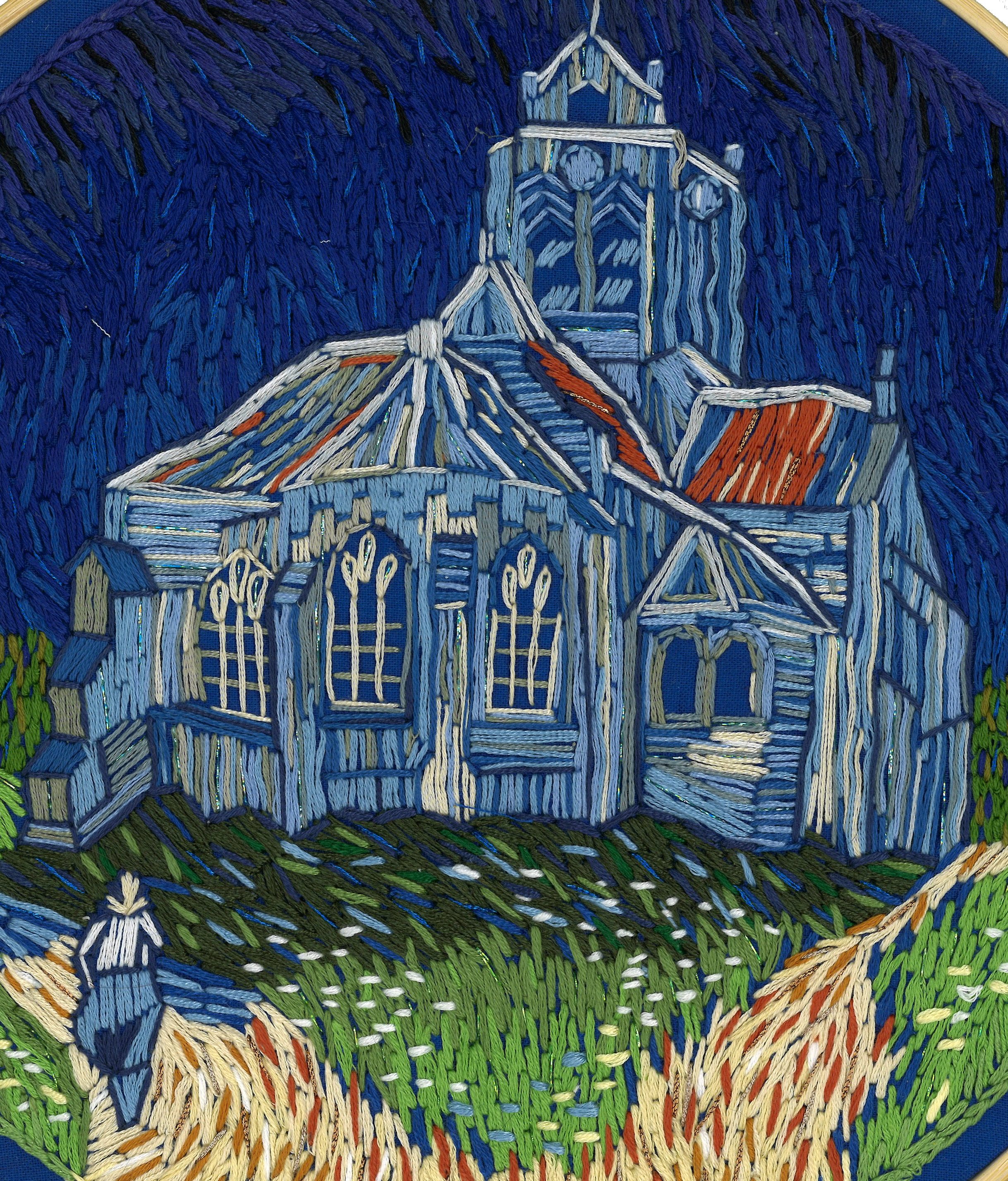
“Church at Auvers” is my favorite post-impressionist Vincent van Gogh painting. The rich ultramarine blue of the sky reminds me of an approaching storm, while the church is still bathed in sun.
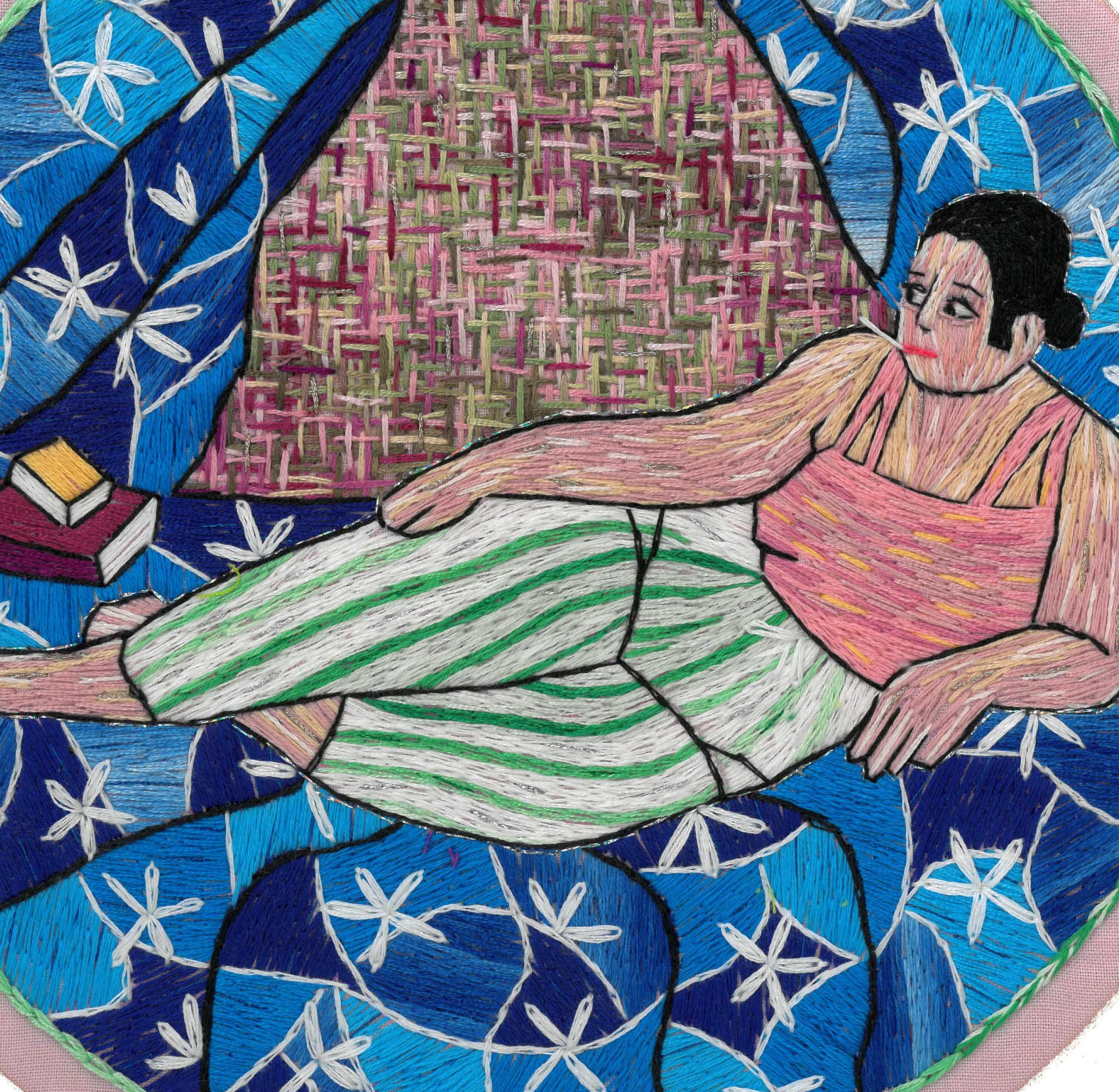
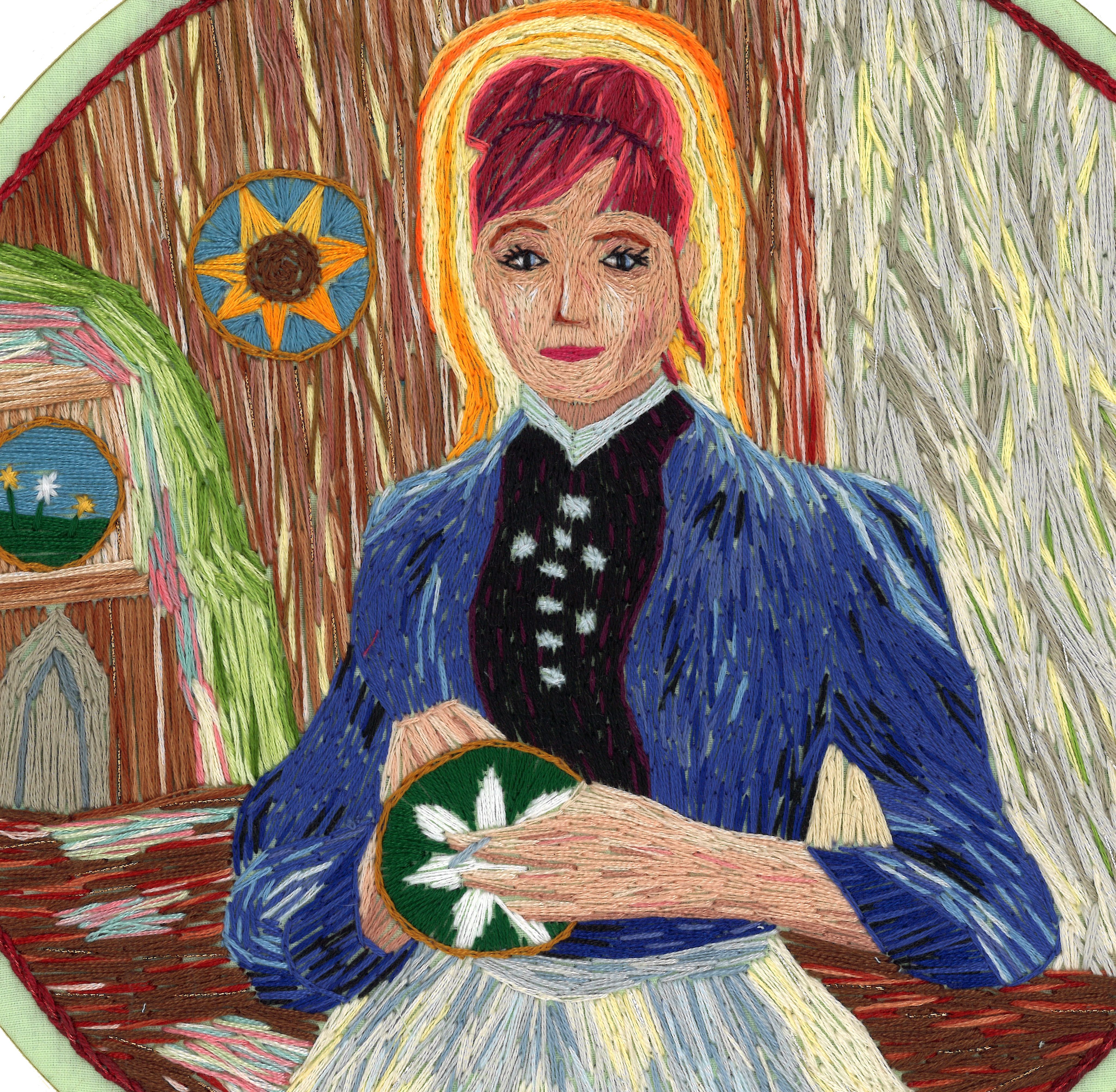
“The Blue Room” is by Suzanne Valadon and is her response to the iconic tradition of painting lounging women. But this is a modern woman, who reads and smokes and is unbothered by constructed beauty standards.
“In the Dining Room” is by Berthe Morisot, but I changed the items from plates to embroideries. The flowers depicted have all been associated with rebellion.
The collection also features pointillism, post-impressionism, and art nouveau.
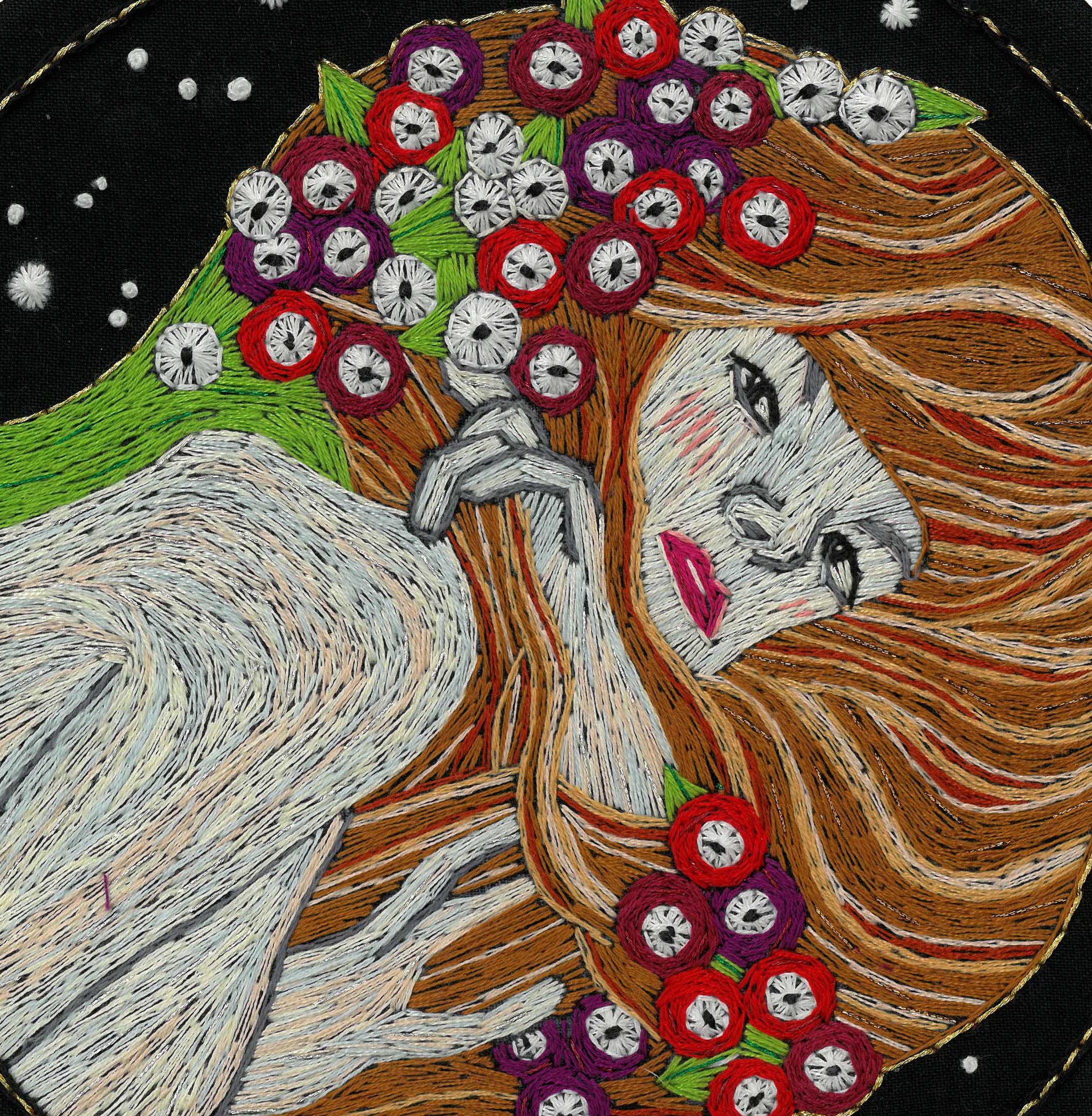
This figure is one part of Gustav Klimt’s “Water Serpents II.” I felt drawn by her gaze and flowing hair.
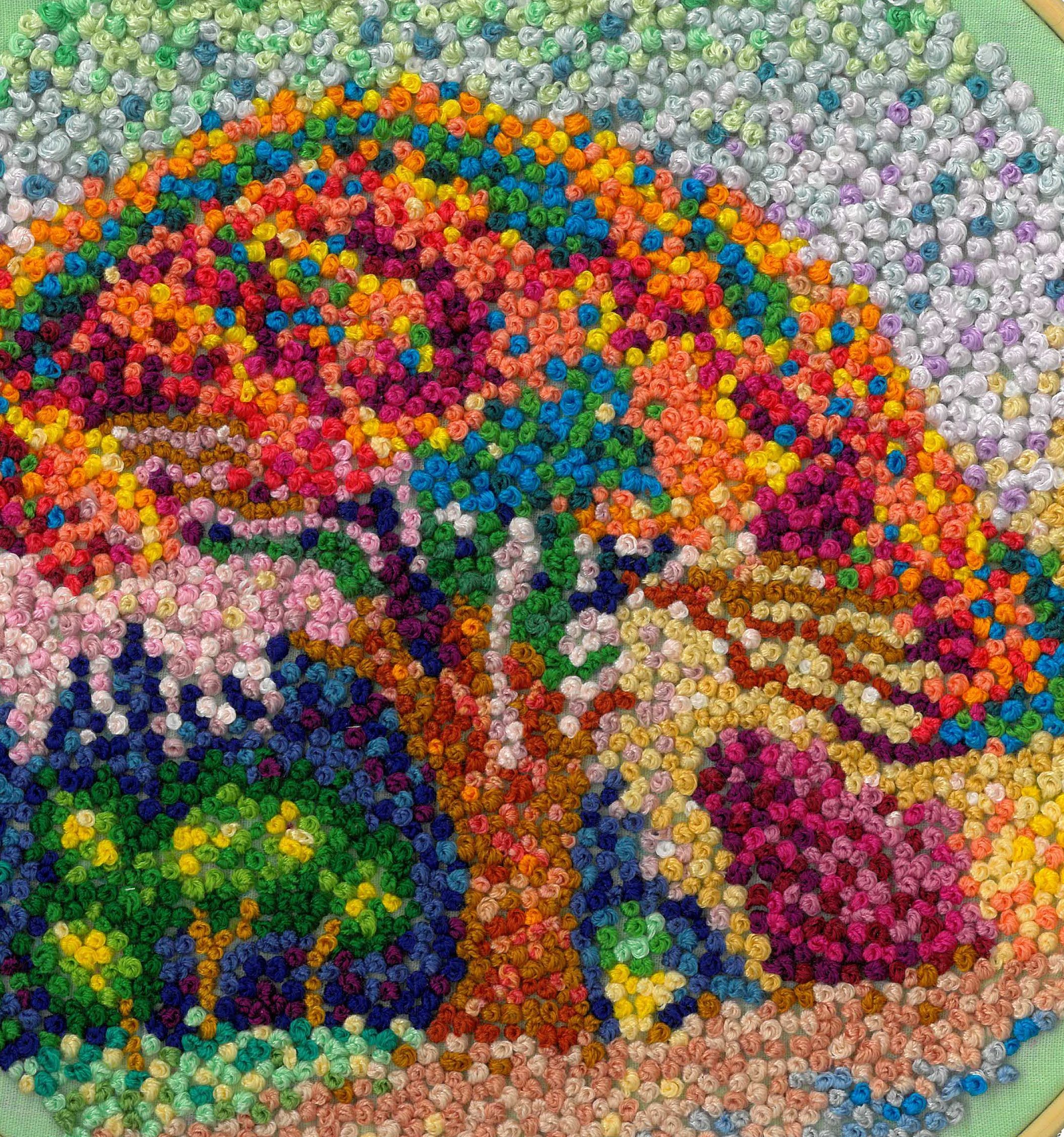
Paul Signac was famous for his pointillism and I could not resist these saturated colors and the way the pine tree has a vaguely brain-ish shape.
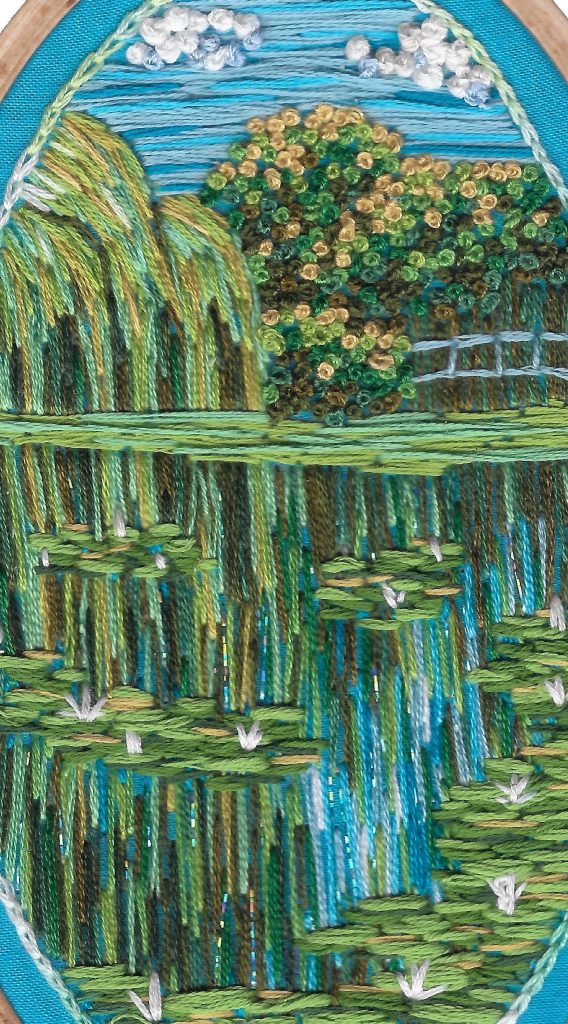
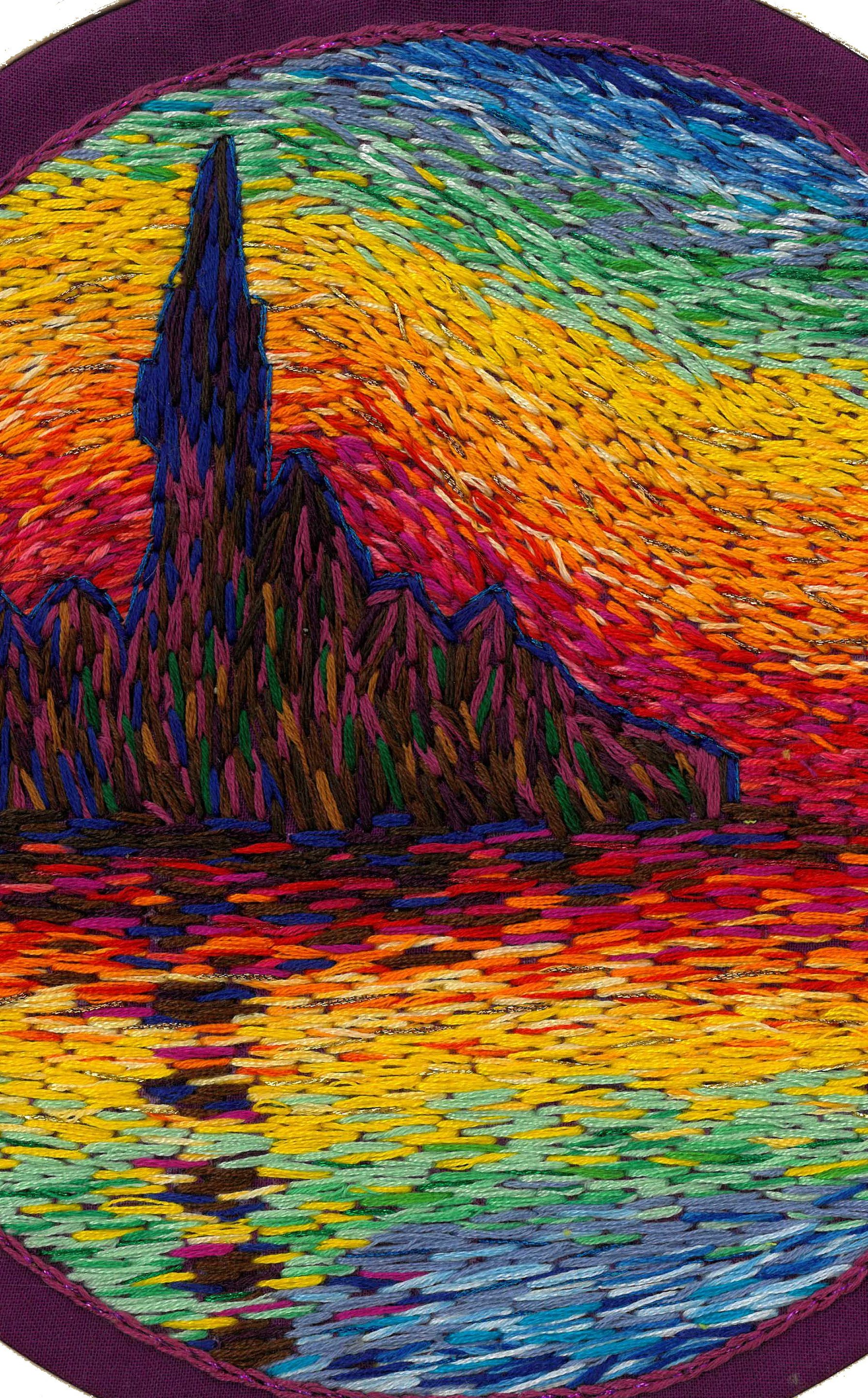
One cannot talk about impressionism without invoking the master Claude Monet. I love translating his brush strokes into stitches.
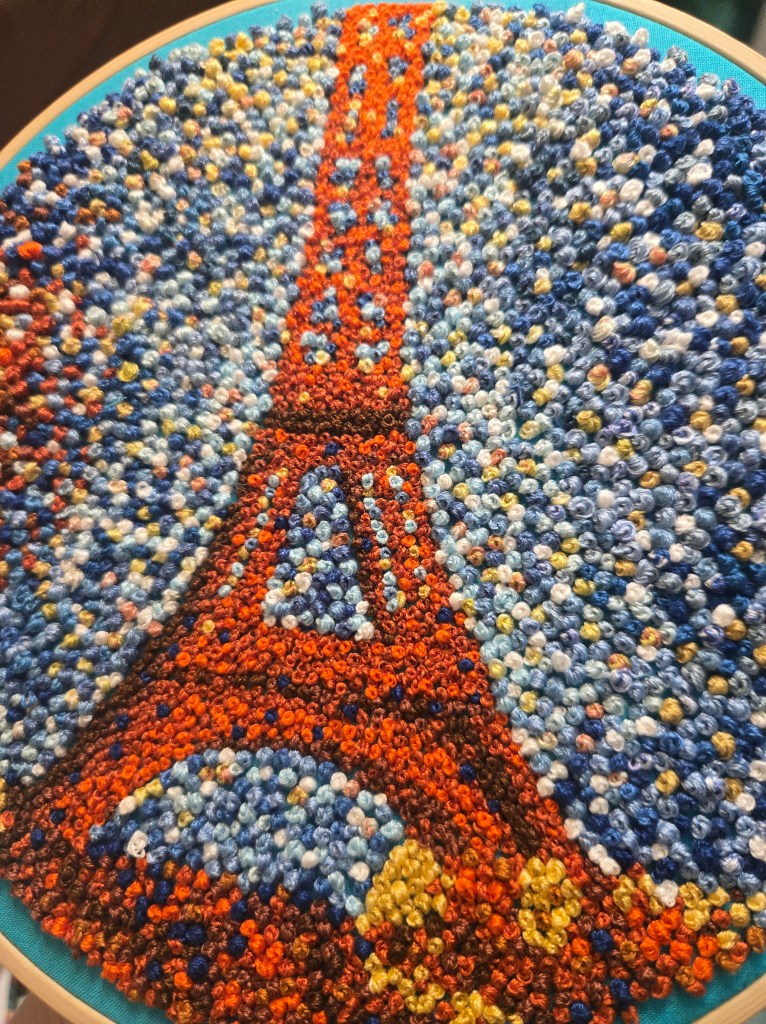
George Seurat may be the most famous pointillist and I couldn’t resist rendering some of his art into knots– French knots, of course.
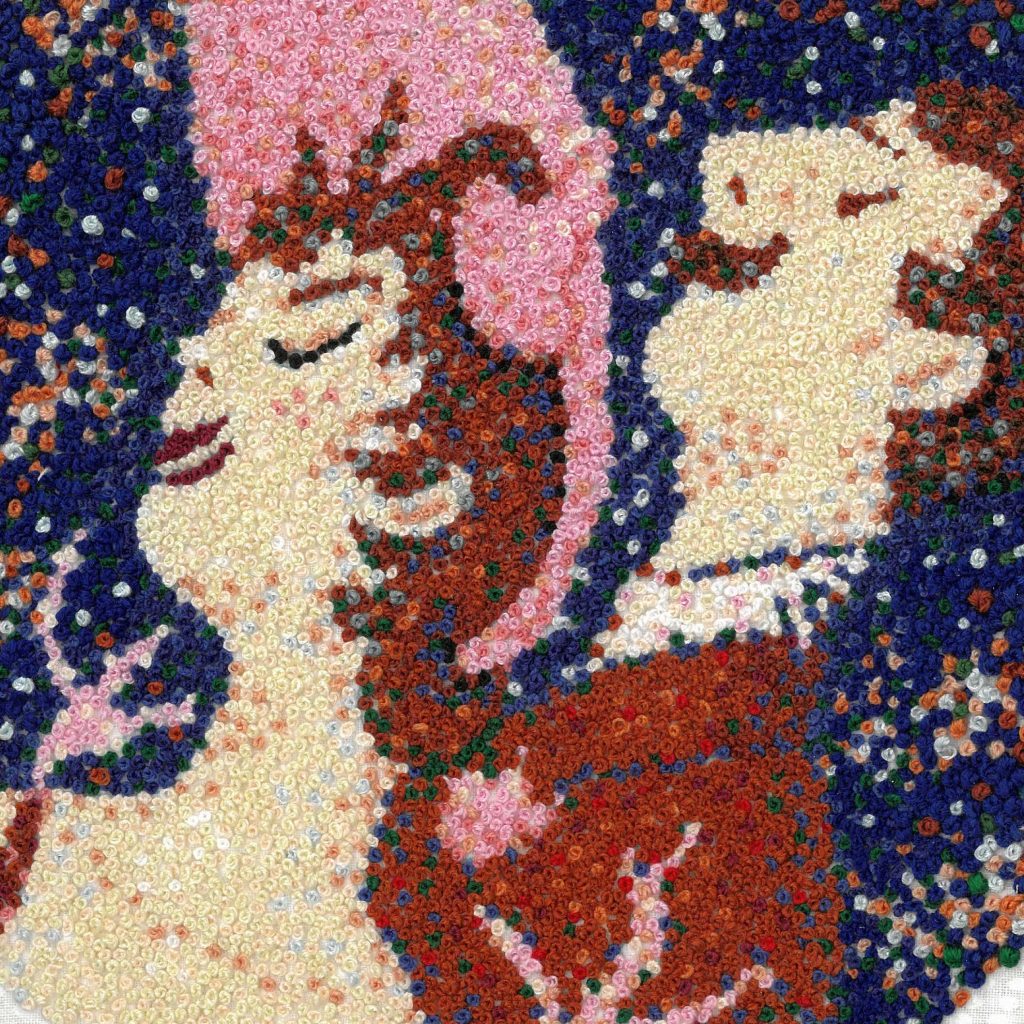
I have rendered several pieces in nothing but French knots, but these figures from Seurat’s “Le Chahut” proved most challenging and ambitious. I used the smallest knots I could in order to give the most detail to their theatrical expressions and evoke the celebration of dance that Seurat depicted.

